
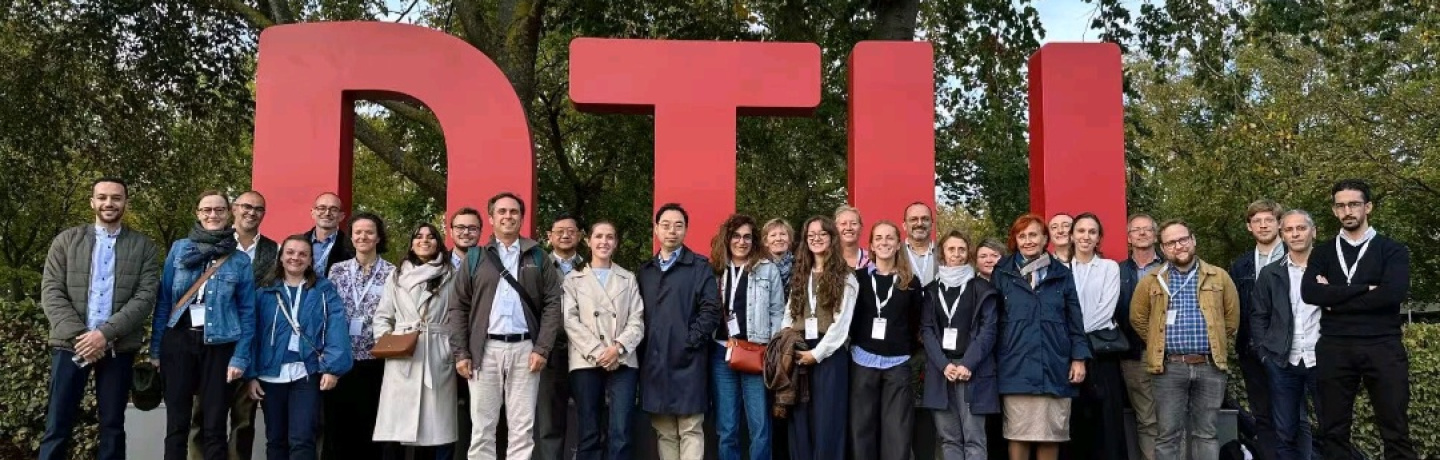
The SIMIACCI project, funded by Horizon Europe and coordinated by IST-ID (CERENA and CEGIST), held its latest consortium meeting on October 1st-2nd, 2026, in Copenhagen, hosted by project partners Technical University of Denmark (DTU) and the Royal Danish Library (RDL).
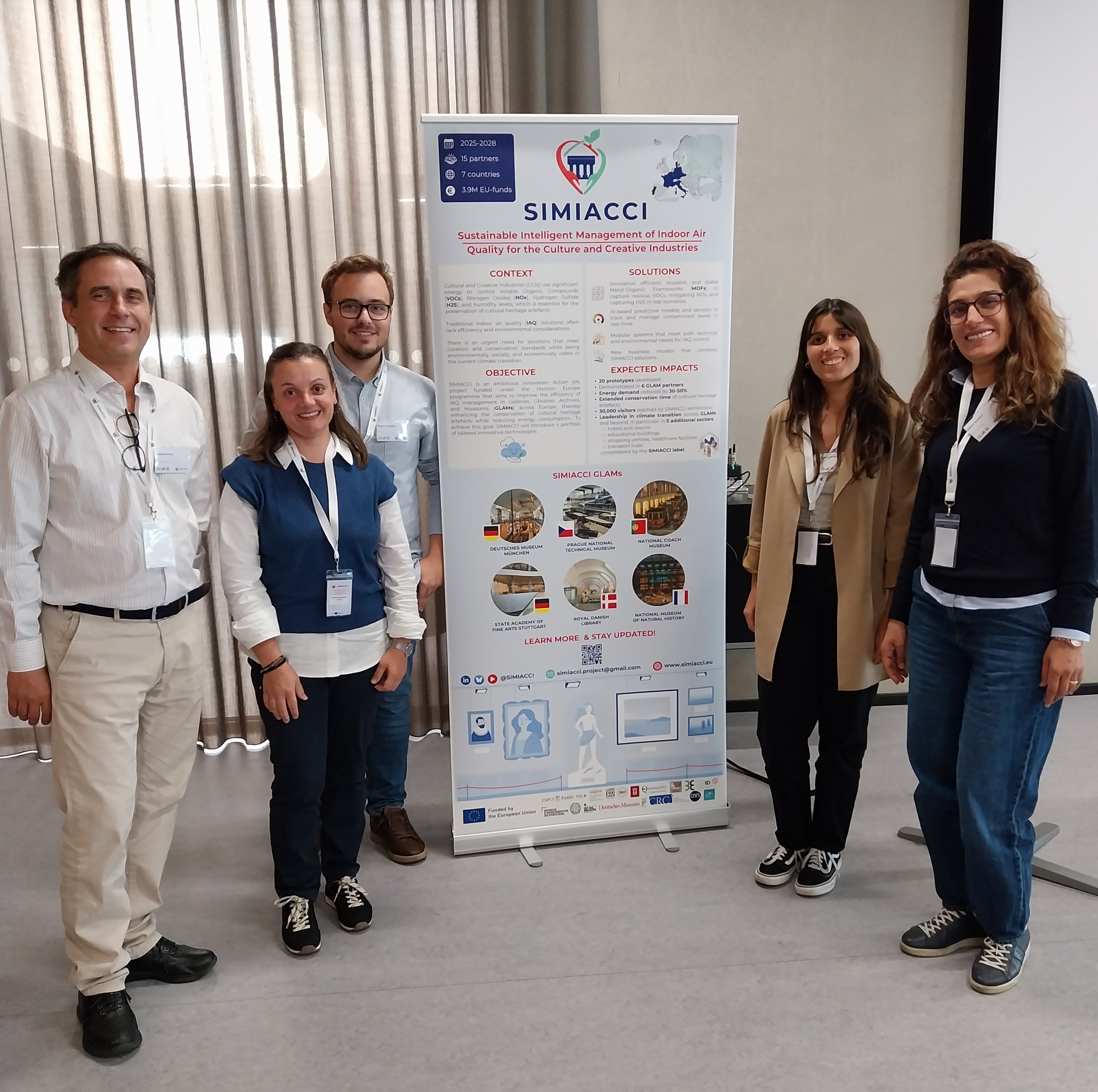
As the project approaches its midpoint, the meeting brought together all consortium partners to review progress, exchange knowledge, and further strengthen collaboration across the different work packages. Representing CERENA were project coordinator Moisés Pinto, Abeer Mohtar, Miguel Teixeira, and Telma Henriques, alongside Vânia Veloso from CEGIST.
The first day, hosted at DTU, focused on technical progress, recent achievements, and ongoing developments across the project. Through productive discussions and knowledge sharing, partners aligned future activities and reinforced their commitment to achieving the project's ambitious objectives.
On the second day, hosted by RDL, discussions centred on the GLAM sector (Galleries, Libraries, Archives, and Museums). The sessions provided a valuable opportunity to reflect on project results, address emerging challenges, and explore innovative and practical solutions for improving indoor air quality in cultural heritage environments. The meeting concluded with an inspiring visit to a photography exhibition hosted at RDL, offering participants an opportunity to further connect in an informal setting and strengthen the collaborative spirit that characterises the SIMIACCI consortium.
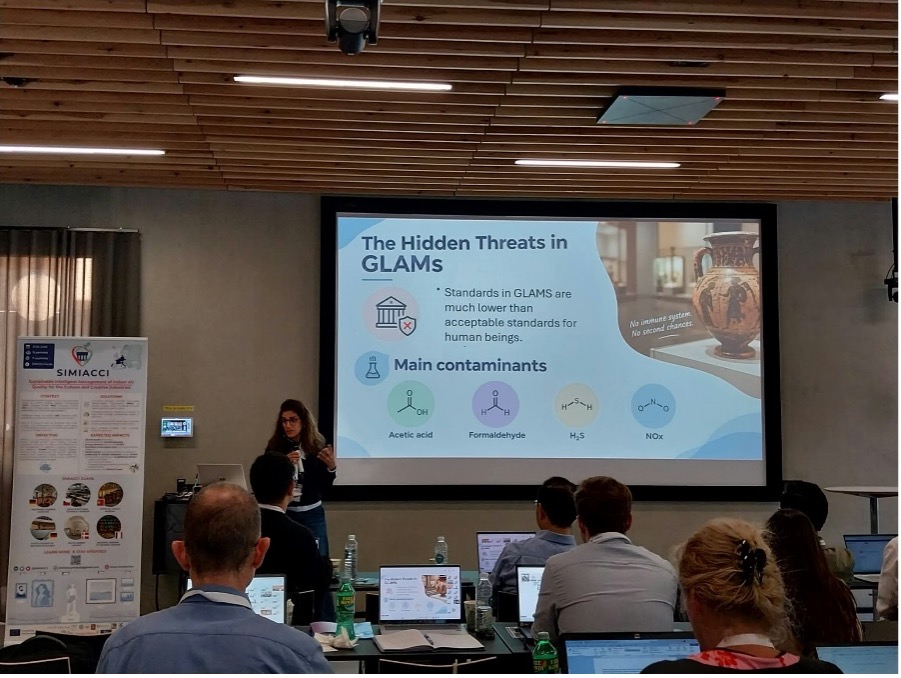
During this stay, Abeer Mohtar was invited to present her work entitled “Predictive modeling for indoor air quality control in GLAMs” at the 4th IEA EBC (Energy in Buildings and Communities Programme) Annex 92 Expert Meeting. The meeting was held in a hybrid format and focused on the research of metal–organic frameworks (MOFs) for indoor air quality (IAQ) control, with particular emphasis on applications in museums, libraries, galleries, and other cultural heritage environments.
SIMIACCI continues to move forward successfully, fostering innovation and contributing to healthier and more sustainable indoor environments for the cultural and creative sectors.